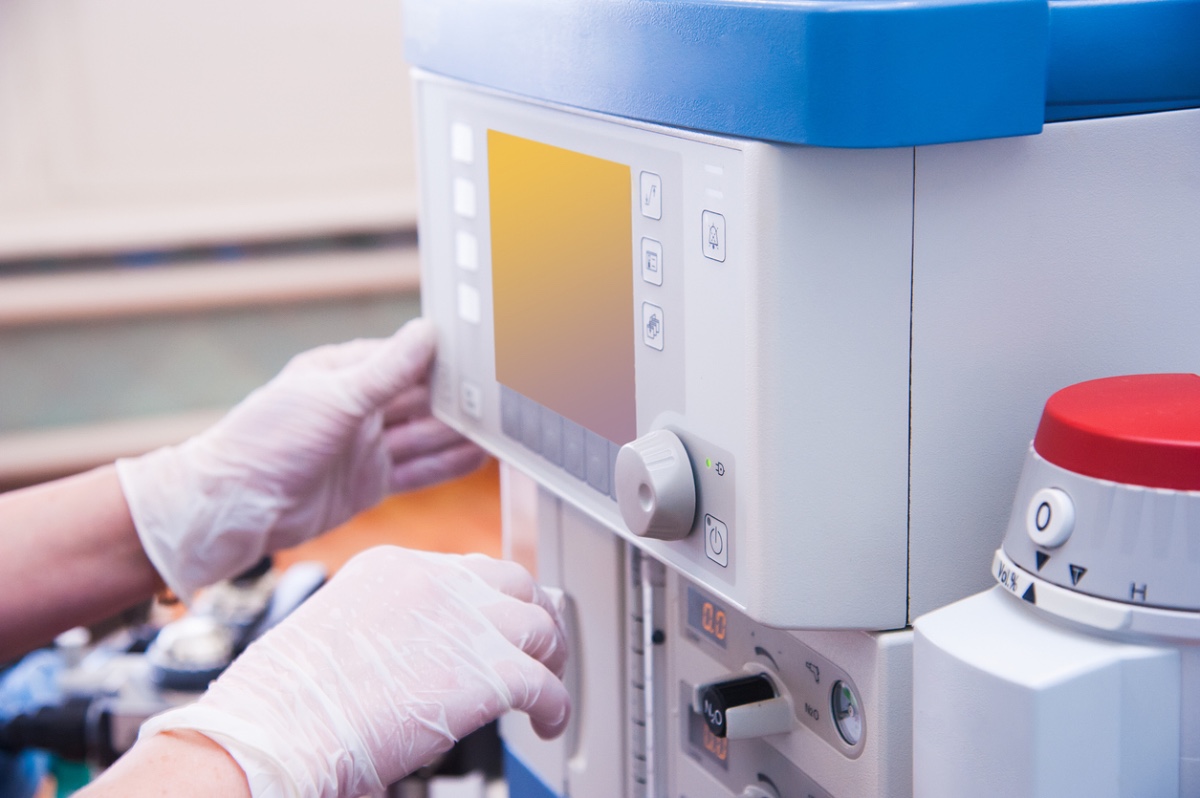
Volatile anesthetic washout is used to accelerate and control emergence from general anesthesia. At the conclusion of surgery, the anesthesiologist rapidly reduces the alveolar and cerebral concentration of the anesthetic while maintaining adequate ventilation, analgesia, and physiologic stability. The speed of emergence depends on the pharmacokinetic properties of the volatile agent, duration of administration, patient factors, and the effectiveness of pulmonary elimination.
When administration of a volatile anesthetic is discontinued, the anesthetic concentration within the lungs begins to decline. Continued delivery of fresh gas without additional anesthetic creates a concentration gradient that facilitates removal of the agent from the breathing circuit and alveoli. Increasing fresh gas flow accelerates replacement of anesthetic-containing gas with anesthetic-free gas, thereby decreasing the circuit and alveolar concentration more rapidly. Ventilation also plays an important role, because increased alveolar ventilation enhances elimination of volatile anesthetic through the lungs.
Washout of volatile anesthetic agents occurs through several compartments. Anesthetic enters the body through the lungs and is redistributed from blood and peripheral tissues back into the circulation before ultimately being exhaled from the lungs. The magnitude of tissue uptake depends on the blood-gas solubility of the anesthetic and the duration of exposure. Highly soluble agents, such as isoflurane, are stored to a greater extent in tissues and therefore generally require longer periods for elimination. Less soluble agents, such as desflurane and sevoflurane, undergo more rapid changes in alveolar concentration and typically permit faster emergence.
The duration of anesthesia also affects washout. During prolonged anesthesia, progressively greater amounts of volatile anesthetic are taken up by peripheral tissues. At the end of a long procedure, these tissue stores can continue releasing anesthetic into the bloodstream even after administration has stopped. This phenomenon can prolong emergence despite discontinuation of the vaporizer. Conversely, after a short procedure, relatively little anesthetic has accumulated in peripheral tissues, allowing the alveolar concentration to fall rapidly.
Several clinical factors can further influence emergence. Obesity may increase anesthetic storage because of greater adipose tissue mass, particularly with more soluble agents. Reduced cardiac output can initially slow pulmonary uptake but may subsequently influence tissue distribution and elimination. Hypoventilation directly decreases pulmonary clearance and can substantially delay emergence. Residual opioids, benzodiazepines, or neuromuscular blockade may also produce delayed recovery even after the volatile anesthetic has been effectively washed out.
At the end of surgery, high fresh gas flow and adequate alveolar ventilation are commonly used to accelerate the elimination of the volatile anesthetic through the washout process. Ventilation must take into account the patient's hemodynamics and acid-base status. The vaporizer is turned off while ventilation is maintained, and the circuit should be appropriately cleared of residual anesthetic. End-tidal anesthetic concentration provides a useful real-time measure of washout and can help determine when clinically significant volatile anesthetic exposure has declined.
Volatile anesthetic washout is governed by the interaction between anesthetic solubility, tissue uptake, duration of exposure, fresh-gas flow, and alveolar ventilation. Understanding these principles allows anesthesiologists to optimize emergence while recognizing that delayed awakening may result from factors other than residual volatile anesthetic. Efficient washout, combined with appropriate management of analgesics, neuromuscular blockade, ventilation, and temperature, promotes a controlled and timely transition from general anesthesia to postoperative recovery.