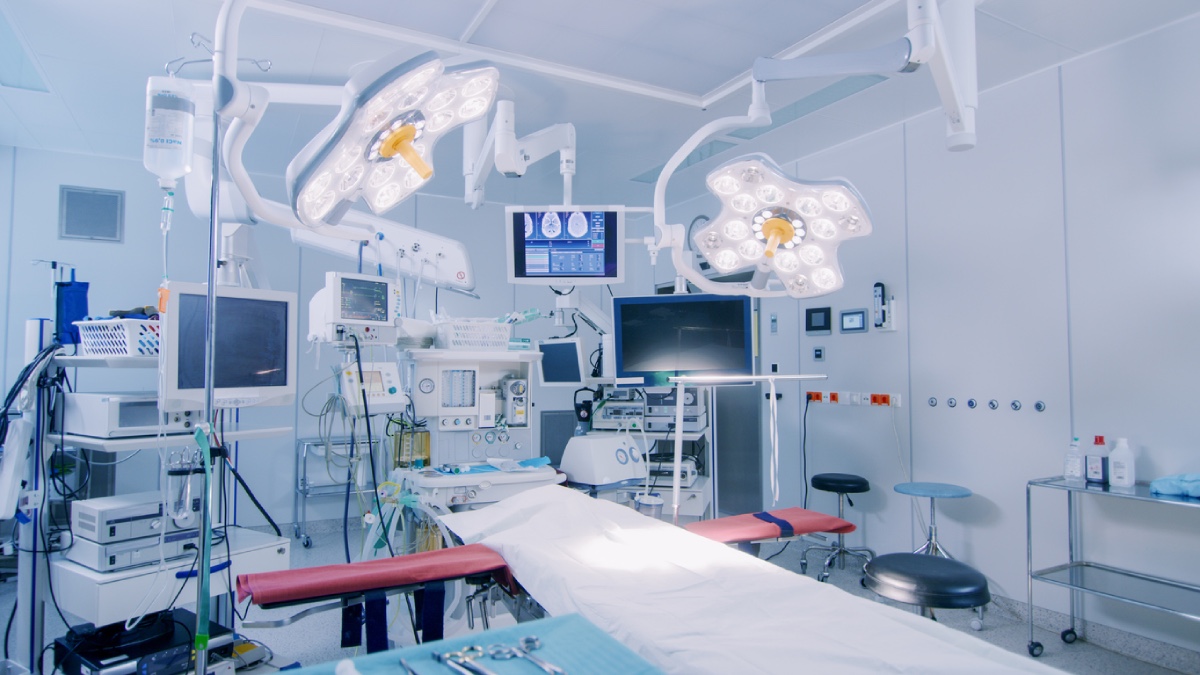
Relative humidity (RH) in the operating room (OR) is an important environmental parameter with implications for infection prevention, patient care, equipment performance, staff comfort, and electrical safety. The commonly accepted humidity range for operating rooms is 20%–60%, based on ANSI/ASHRAE/ASHE Standard 170. This range should be regarded as an environmental design target rather than a threshold at which patient safety abruptly changes. The evidence defining an optimal intraoperative humidity level remains limited.
Low ambient humidity has several potential consequences. As relative humidity decreases, evaporation increases, and electrostatic charge generation becomes more likely. This was historically of greater concern when flammable anesthetic agents were routinely used. Modern inhalational anesthetics are not flammable under ordinary clinical conditions, and contemporary ORs incorporate multiple electrical and fire-safety measures that significantly mitigate the risks of humidity falling briefly below the standard range. Nevertheless, excessive dryness may increase static discharge and contribute to the accumulation and persistence of airborne particulate matter. Low humidity can also contribute to dryness of the skin and mucous membranes. For anesthetized patients, however, the effect of dry gases delivered directly to the respiratory tract is more clinically relevant than ambient humidity. Prolonged exposure to dry medical gases, particularly during mechanical ventilation and high fresh-gas flows, can impair mucociliary function and increase airway drying. Appropriate respiratory-gas humidification should therefore be considered according to the duration of ventilation, airway management, fresh-gas flow, and individual patient factors.
At the opposite extreme, excessive humidity presents a different set of concerns. Sustained RH above approximately 60% can promote microbial and fungal growth, condensation, deterioration of supplies, and malfunction of some equipment. Condensation may occur on cool surfaces, potentially affecting electrical and electronic equipment and creating undesirable environmental conditions. High humidity can also complicate storage and handling of sterile materials. However, the relationship between ambient humidity and surgical-site infection is not straightforward. Current evidence does not establish a specific intraoperative humidity threshold above which surgical-site infection risk rises substantially. Consequently, a brief increase above 60% should not automatically be interpreted as an immediate infectious or anesthetic emergency.
When OR humidity falls outside the recommended range, clinicians should consider the magnitude and duration of the deviation, whether the value is stable or changing, the presence of condensation or water intrusion, equipment performance, and the clinical urgency of the procedure. A transient deviation should generally prompt communication with operating-room leadership and facilities or HVAC personnel rather than automatic postponement of an otherwise necessary procedure. Persistent or severe abnormalities, particularly when accompanied by visible condensation, water damage, impaired ventilation, compromised sterile supplies, or equipment malfunction, warrant a more cautious assessment and may justify delaying elective surgery until the environmental problem has been corrected.
Ultimately, 20%–60% relative humidity represents the commonly accepted environmental range for the OR, but humidity should be interpreted in clinical context rather than as an isolated number. For anesthesiologists, the distinction between ambient OR humidity and respiratory-gas humidification is particularly important. Maintaining appropriate environmental humidity levels while ensuring adequate humidification of inspired gases when clinically indicated contributes to a safe perioperative environment. Effective management of significant humidity deviations requires collaboration among anesthesia, surgery, nursing, infection prevention, and facilities engineering teams. A structured institutional policy that defines acceptable limits, monitoring requirements, escalation procedures, and criteria for continuing or postponing surgery is essential.